The Birds are Nesting
There is something intensely personal about finding a bird’s nesting site. Birds work so hard to find a spot that provides protection from the elements and predators that I feel a strange mix of guilt and protection when discovering their nest.
One or two birds will typically stick around a specific area for several days. This could be a bush or a hole in a dead tree. They’ll come and go from that spot pretty often. Sometimes, you’ll see them with branches or leaves in their beaks. That’s pretty much a dead giveaway.
Right now, we have a pair of Brown Thrashers nesting in an azalea bush in the front of our house. For a week and a half or so, I’ve seen them darting in and out, shaking the bush as they build their nest. This is year two for the thrashers in that spot. It’s always a treat to have returning birds.
Another tip-off that you’re close to a nesting site is the bird’s behavior. The Thrashers are far more bold than normal. Normally they are relatively shy birds, tending to stay in the underbrush and darting away at any unusual movement or sound.
Now, however, it’s a regular occurrence for me to be within five or six feet of them as they hop around, looking for one last piece of their nest or their next snack.
Other birds can be a bit more extreme in their reactions to possible threats. Mockingbirds, for instance, are not at all hesitant to swoop very close to one’s head should you find yourself unlucky enough to be near their nest.
But nothing rivals the Killdeer.
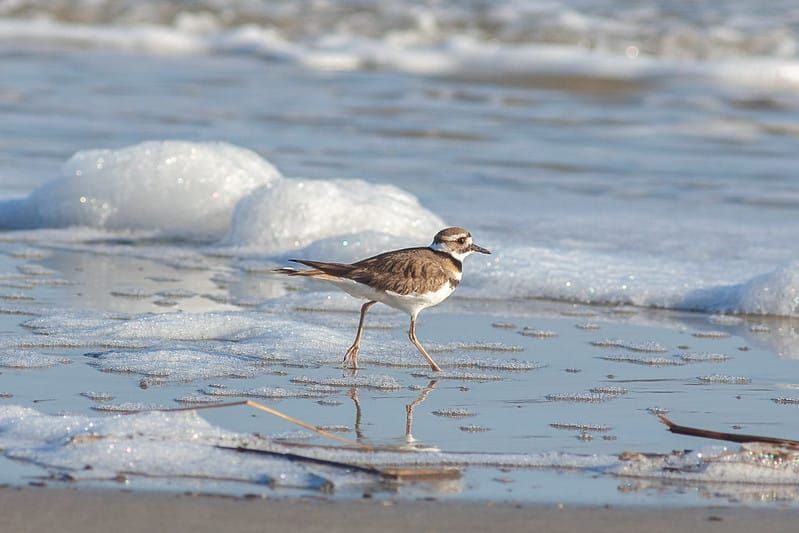
The Killdeer, a beautiful brown, black, and white bird with stunning red eyes, will fake an injury when an unwanted animal comes close to their nest. It will flap and flail around the ground, dragging the threat away one desperate flap at a time.
Then, when the Killdeer deems it’s flapped far enough away from the nest, it will take flight, darting away to safety—saving itself from its own sacrifice.
There’s something subtly beautiful in the whole display. A perceived weakness that turns to control, a shift in the balance of power. Easy prey that turns into a flash of white and brown as their trilling call mocks those left on the ground.