The Fall and the Rise
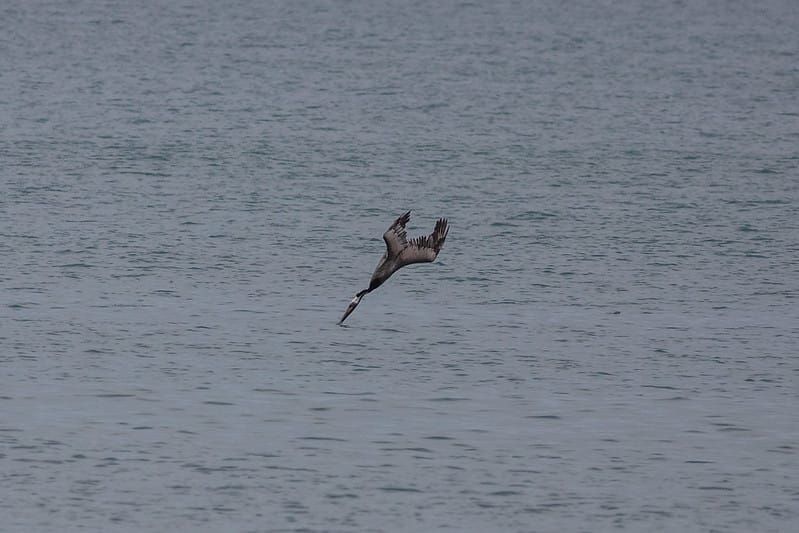
It’s a moment of pure power, focus, and grace. A moment when all of the bird works together for a singular purpose. The head is set, the eyes locked on their prey, even though the body is in motion. In the dive, their wings remain outstretched, and tail feathers fanned so they can make the minute adjustments they need for the catch. Then, at the last moment, everything readies back for impact—the wings tuck back, the tail feathers fold in.
I recently took a family trip to the Outer Banks in North Carolina. Fun Fact™: I love me some coastal birds, mostly because I so rarely get a chance to see them. And while the waders and gulls are great, I had a particular blast watching the pelicans, terns, and Osprey, especially when they were hunting.
Seabirds go beak first. The tern opts for more precision, catching the fish in the tip of its sharp beak. They are tactical in their approach and in their return to flight, typically spending mere seconds in the water before returning to the air.
The pelican goes for volume, scooping both prey and a healthy dose of water in its prominent beak. They will then often spend time just bobbing along in the water in a moment of respite. When it’s time to return to the sky, they will launch into the furious flurry of flaps that are needed to get their large body back into the air.
The Osprey stands aside from the seabirds. A hawk by family and not exclusive to the seas, they are a regular visitor nonetheless and are often seen soaring over the coast.
Their approach to hunting is similar to the pelican but decidely more predatory. Even its features are far more murdery in nature. While the pelican’s beak is comically larger and expandable, the Osprey’s hooked beak is perfect for ripping through scales and creating bite-sized chunks for hungry babies. And while the pelican’s body and webbed feet are perfect for a post-splash bob, the Osprey is streamlined and welds a pair of sharp talons that readily pierce and grasp even the slipperiest of fish.
This last feature distinguishes the hawk from the seabird. While the Osprey takes a similar approach in the initial stages of its dive, the raptor takes a different approach to the catch. At the point of near impact, the Osprey unfurls its wings, and the sudden deacceleration enables it to swing its body around so it enters the water feet first. Seconds after entry, it again takes flight, ideally with a fish grasped in its talons.
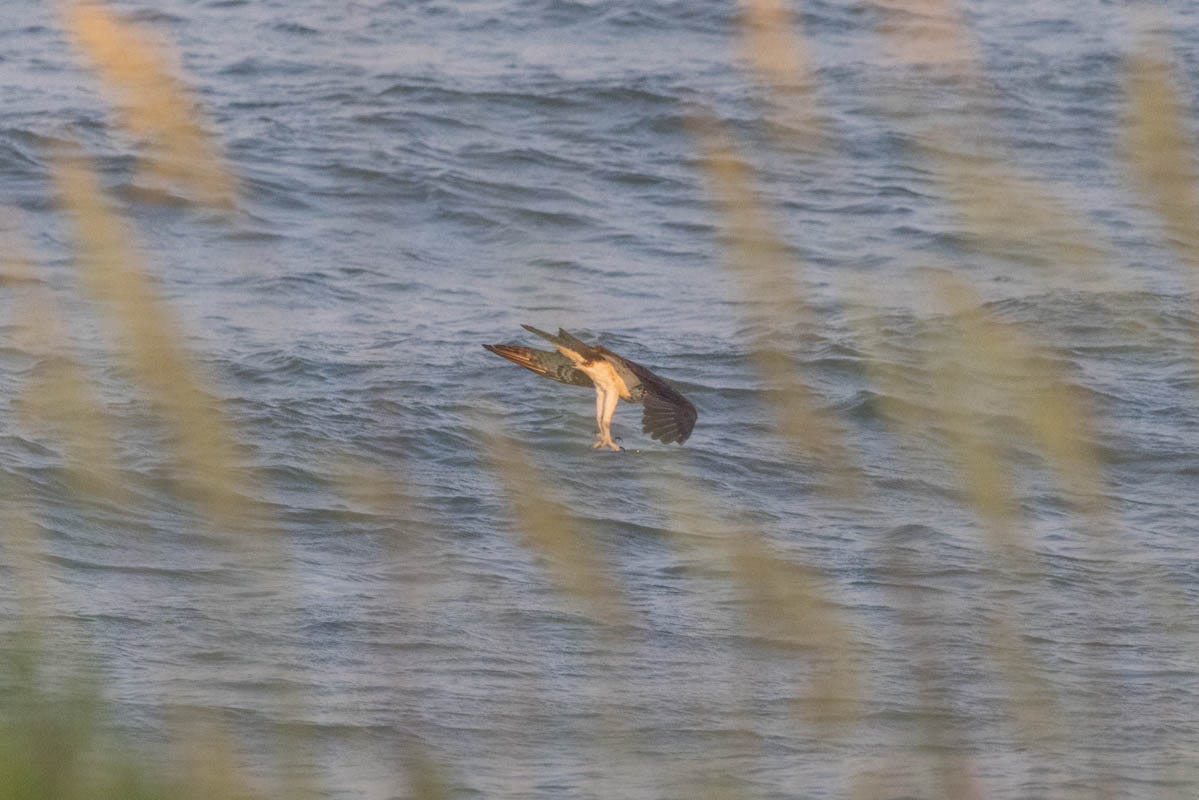
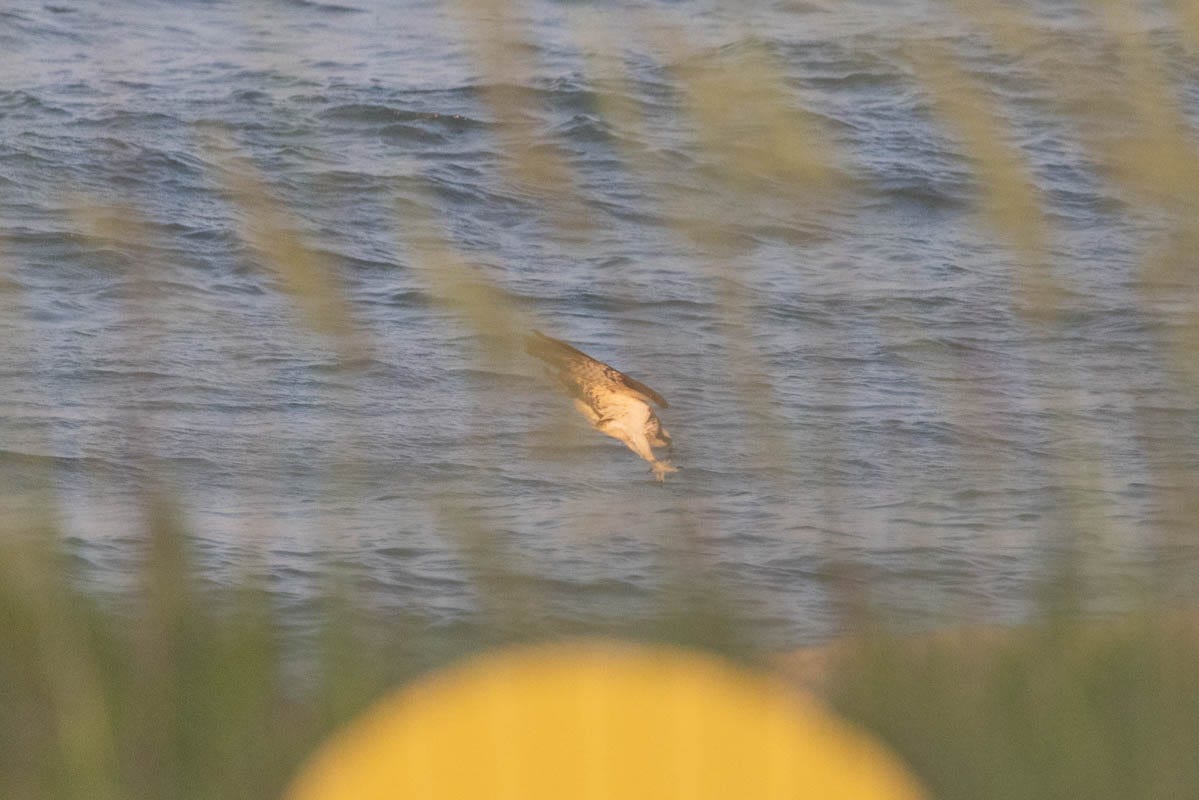
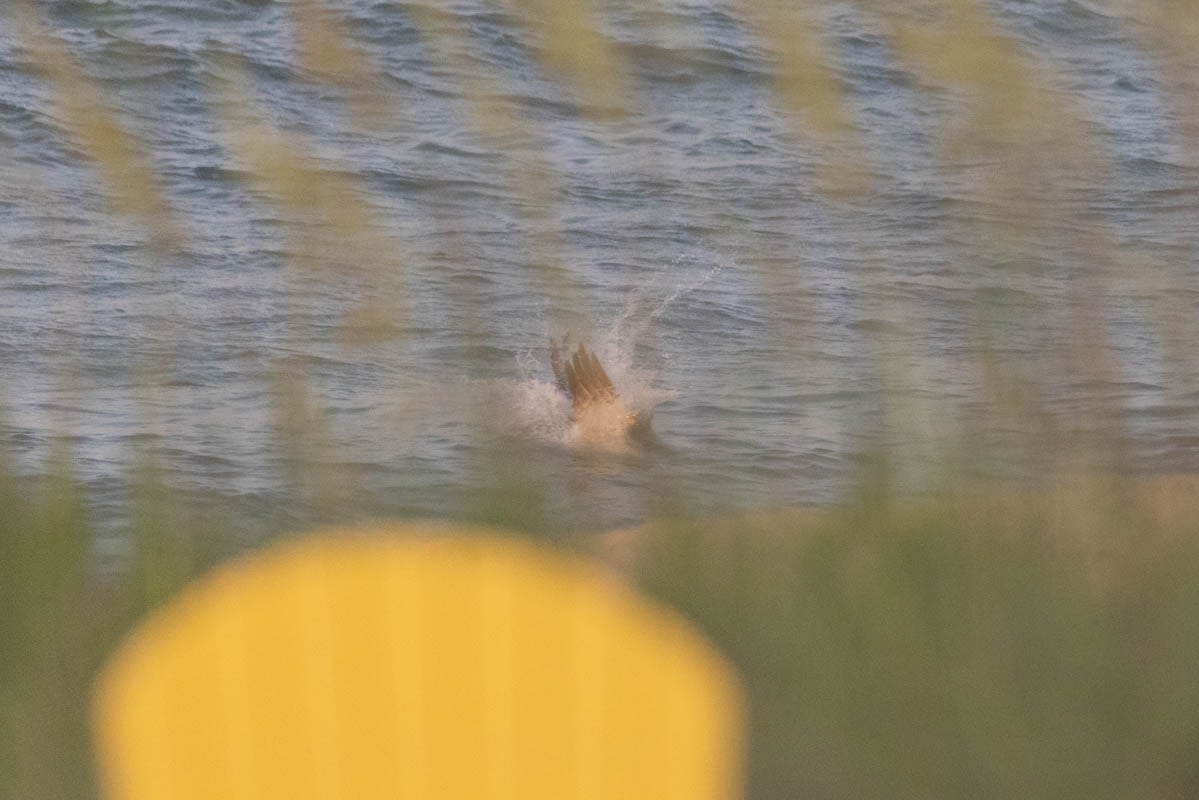
Once airborne, the Osprey has one more trick. It will maneuver the fish so the body of the prey and that of the bird line up, creating a streamlined and aerodynamic profile.
The entire process, from hovering focus to chaotic splash, is over in seconds. It’s a down, and up they will repeat many times throughout the day, as rote to them as casting a fishing line is to us.
I wonder, though, what it must feel like in those short moments. What must the perspective be hovering some 40 or 50 feet up? A patch of ocean, a school of fish, perhaps. And what of the dive? The sudden plummet down as if an invisible floor dropped from underneath them. The wind rushing over their outstretched wings. The hard splash as they enter the water.
If their aim is true, their angle just right, then they come away with a meal. And, if not, then they again return to the air, water droplets fanning through the air as wing beats take them back up, back to another chance.